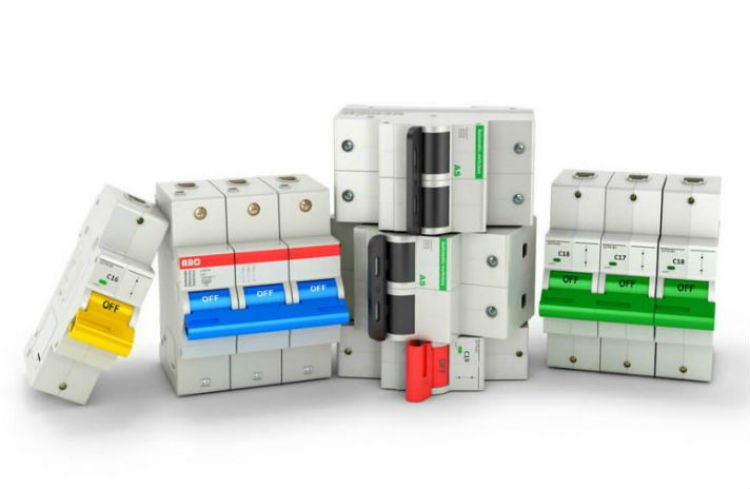
The circuit breaker is an essential electromechanical component for electric installations. This post shows how it works.
How does the circuit breaker work?
It has the function to protect the electric installation against short-circuit, overcurrent and current peak. This is an abrupt increase in current for a short time period. When the current passes a limit, the circuit breaker automatically shuts down the circuit to avoid fire, burning out appliances and electric shocks.
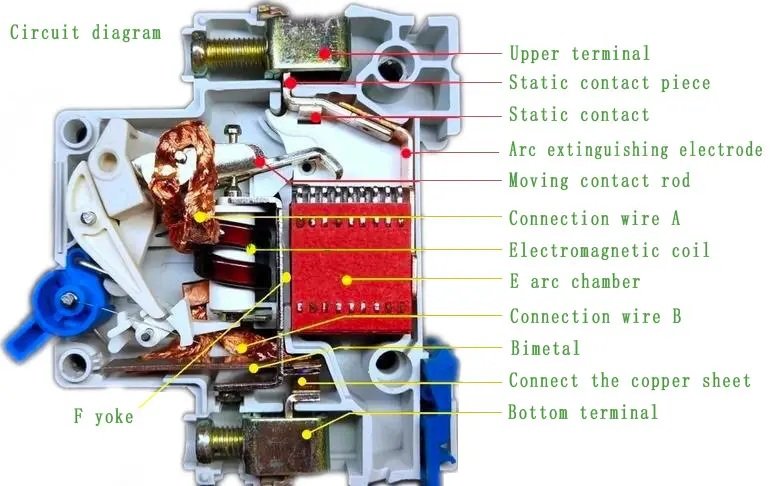
Thermal protection
This protection is based on the materials’ thermal expansion. When a material’s temperature increases, it expands; when cool down, its dimensions decrease. This happens because when a material’s temperature increases, its molecules vibrate with more intensity.
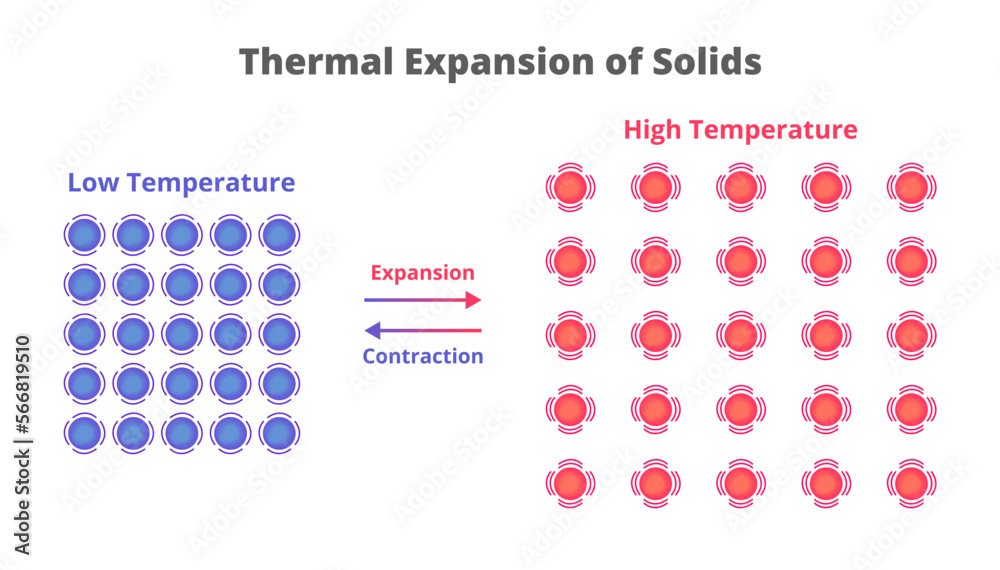
The expansion or contraction rate depends on expansion coefficient, whose value is unique for each material. The electric current passes through a bimetal, made of two metals whose expansion coefficients are different from each other. Usually, the materials are: copper, brass or aluminium with steel or iron with nickel.
When the electric current surpasses a determined limit, the bimetal expands due to heat, and it bends, opening the circuit. With the current interruption, temperature goes down, consequently, the bimetal returns to its original shape.

Magnetic protection
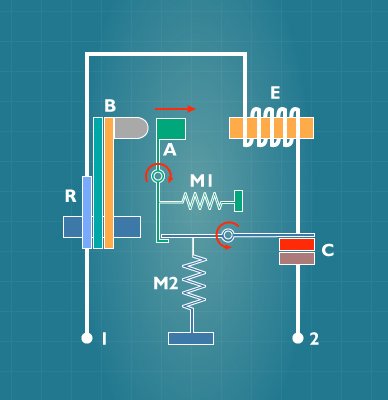
When the current passes through the coil (E) reaches an excessive value, the generated magnetic field on inside moves the magnetic piston (A), moving the contact rod (M1 and M2) and opening the contact (C) with the circuit. This is a protection against short-circuit and current peaks.
Extinction arc chamber
An electric arc, or voltaic arc, is a luminous and continuous electric discharge which happens between two high-voltage conductors, separated by an air gap, and it causes air ionisation.
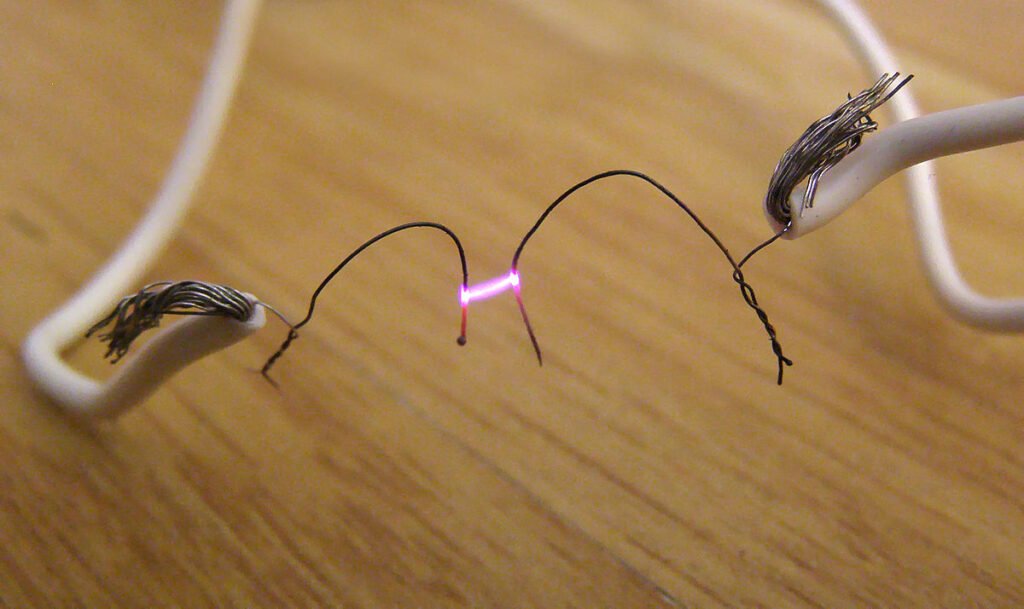
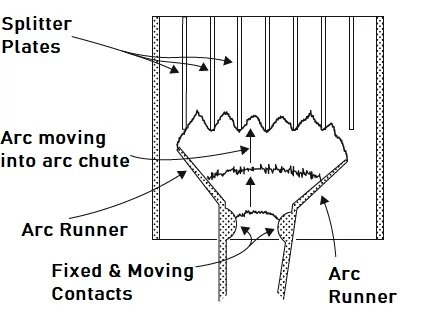
Since the current that passes through the circuit breaker is high, an electric arc appears when the contacts open. An extinction arc chamber is necessary to interrupt current flux and avoid excessive heat to cause damage to the circuit breaker.
Inside the chamber, there are metallic splitter plates, which divide and dissipate the arc when the contacts separate from each other.
Another method to extinguish an arc is to have vacuum or SF_{6} (sulfur hexafluoride) between the contacts. This gas is dielectric, absorbs free electrons and has high thermal conductivity.
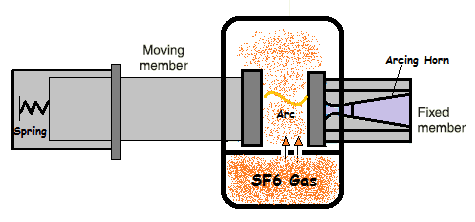
The circuit breakers in residences have a chamber with splitter plates. Chambers with the SF_{6} gas are used in medium and high power circuit breakers, present on substations.
The next post in Energy topic will be about the type of circuit breakers.