


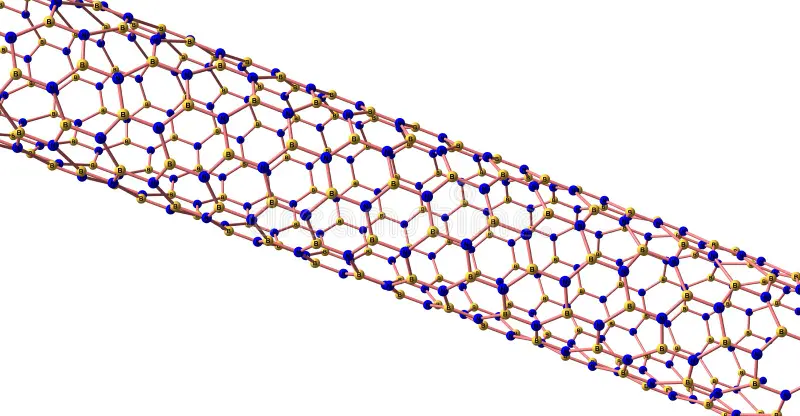
A flexible film made of boron nitride nanotubes (BNNT) is an efficient alternative on protection against cosmic radiation.
To know what cosmic rays are and the damage they cause to cells and DNA, click on the following link.
Cosmic rays: what are they?cosmic rays
Source: Phys.org
A research team led by Dr. Jang SeGyu at the Functional Composite Materials Research Center of the Korea Institute of Science and Technology (KIST) and the research team led by Professor Choi Siyoung at the Department of Bio and Chemical Engineering of the Korea Advanced Institute of Science and Technology (KAIST) have developed a high-density BNNT protective shield. This shield, created by densely-packed BNNTs, is robust, efficiently conducts heat, and effectively blocks cosmic radiation.
The research is published in the journal Advanced Functional Materials.
The research team developed a technique that allows BNNTs to remain stably dispersed in water without agglomeration by utilizing a surfactant (dodecylbenzenesulfonic acid), a compound commonly found in soap.
This enabled the team to produce BNNTs in a high-concentration liquid crystal, in which the nanotube strands naturally align in one direction. Using the BNNT liquid crystal, the team fabricated BNNT films with both high alignment and density.
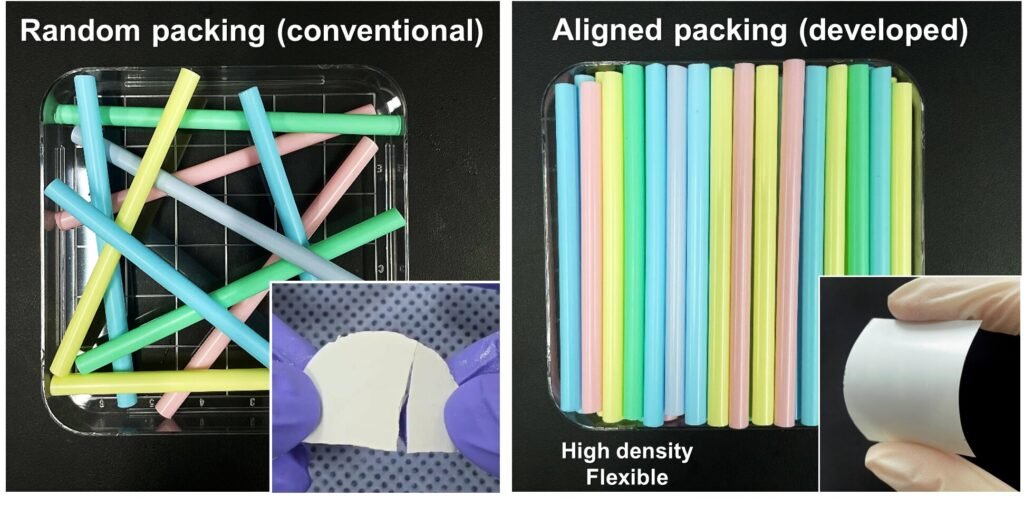
The resulting BNNT film exhibited over three times higher density and approximately 3.7 times improved neutron shielding performance compared to the conventional brittle BNNT sheet. In addition, it was flexible yet strong, making it suitable for application in a variety of structural systems.
Joint simulations conducted with NASA, showed that the BNNT film demonstrated approximately 15% higher radiation shielding efficiency than aluminum at the same mass thickness. In other words, its superiority as a space radiation shielding material has been indirectly verified.
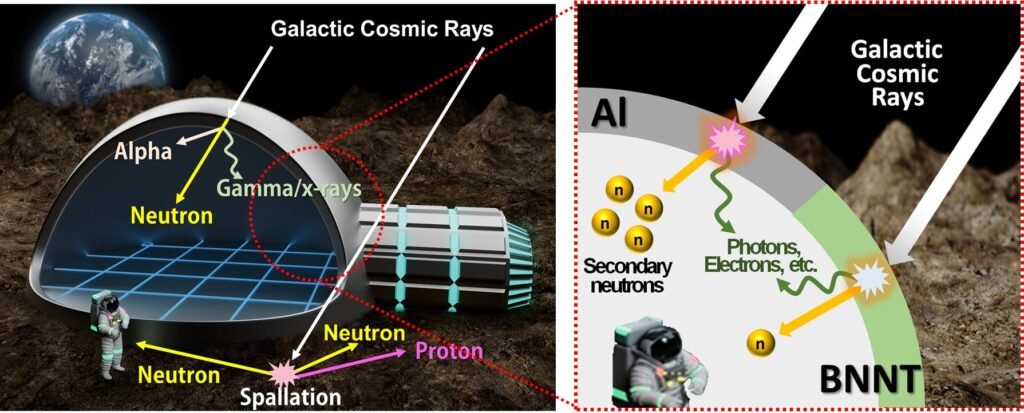
When applied at an appropriate thickness, the BNNT film can provide radiation protection for lunar astronauts comparable to the safety levels of the International Space Station (ISS).
This achievement could extend mission durations by up to two-fold, making it a key enabling technology for future long-term space exploration and the construction of lunar and Martian bases.
Looking ahead, BNNT film could be utilized in lightweight spacecraft shielding structures, protective barriers for lunar and Martian bases, and high-performance spacesuit materials. These applications are expected to contribute significantly to the safety of human space activities and to strengthening technological competitiveness in the era of “New Space.”
Dr. Jang Se Gyu of KIST stated, “Given its mechanical strength and excellent thermal conductivity, BNNTs holds strong potential as a versatile, next-generation material for use not only in space applications, but also in aerospace, defense, and nuclear power facilities, as well as other advanced industries.”
 is an efficient alternative on protection against cosmic radiation.)