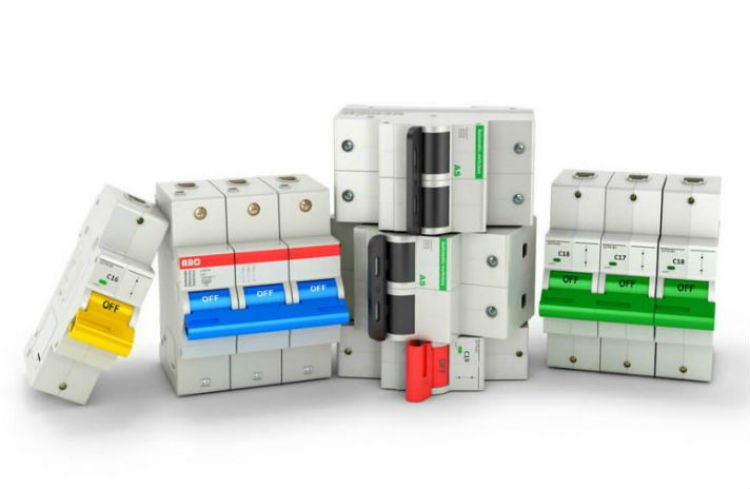
This post is the second part about circuit breakers and shows the different classifications and their respective applications.
Click on the following button to access the first part.
Circuit breaker: what is it and how it works?Click here
Single-phase, two-phase and three-phase circuit breakers
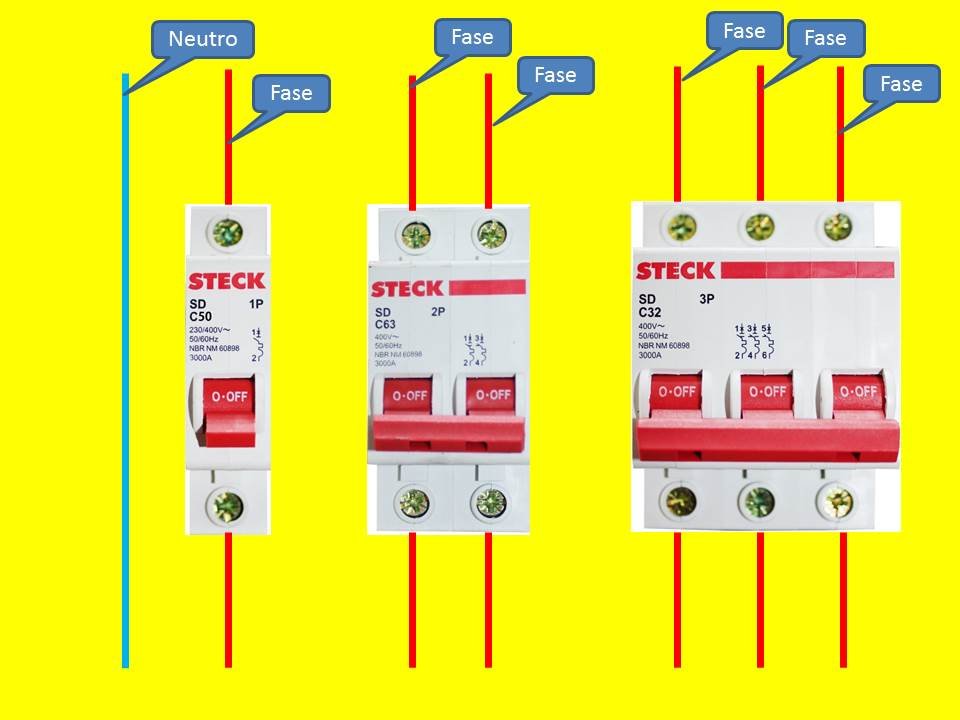
The single-phase or single-pole circuit breakers (on the figure’s left) interrupt only one phase (wire with a voltage level), they serve for illumination circuits and with single and with single sockets, with only one phase and neutral. While the two-phased or two-pole ones (on the center) are for circuits such as electric showers and with two phases, whose voltage is 220 V. And the three-phased or three-pole ones (on the right) are for industry, high power grids and circuits which use three phases, with 220 V or 380 V.
Circuit breakers’ tripping curves
The tripping curve defines what types of loads the circuit breaker must protect.
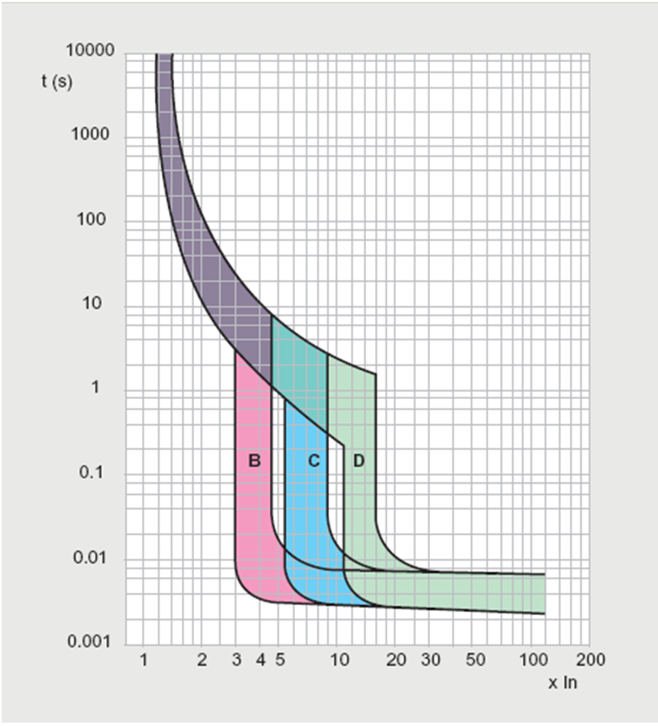
Curve B
The circuit breaker with this curve protects resistive loads, for example, heaters, electric showers, ovens, etc. In this curve, the circuit breaker is activated while the current is 3 to 5 times the nominal current.
Curve C
It serves to protect inductive loads, by that, which use motors and coils. Also protects air conditioners, microwave ovens and illumination circuits. The circuit breaker with this curve will act when the current reaches 5 to 10 times its nominal value. Because inductive loads require a high starting current.
Curve D
For a circuit breaker with this curve to break the circuit, the current must be from 10 to 20 times its nominal value. It’s adequate for big inductive loads such as big transformers and motors.
Curve K
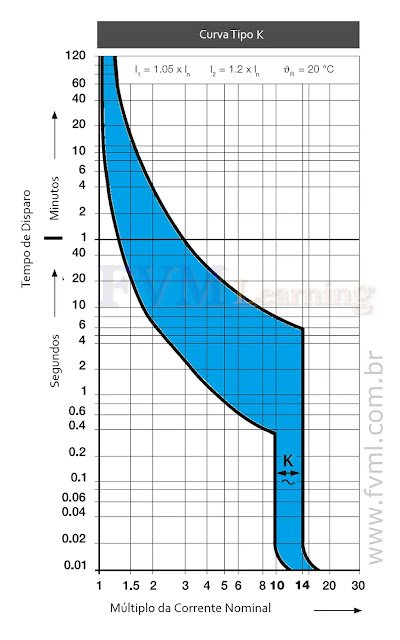
This is Curve D’s subdivision. Circuit breakers with this curve open the circuit when the current is between 10 and 14 times the nominal value and protect motors and transformers that require high starting current.
Curve A or Z
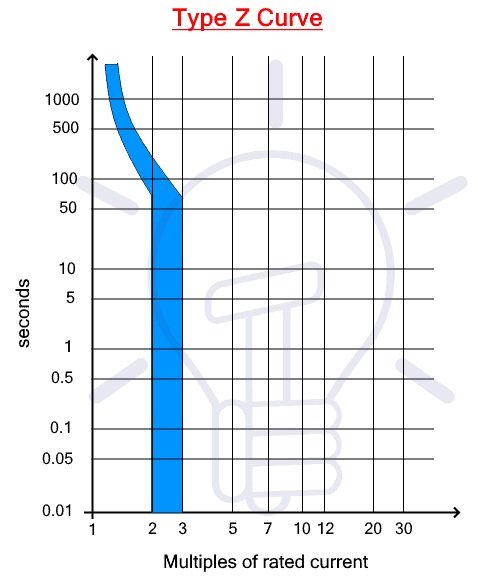
Circuit breakers of this type act when nominal current becomes 2 or 3 times higher and protect sensitive equipment and instruments.
NEMA and DIN circuit breakers
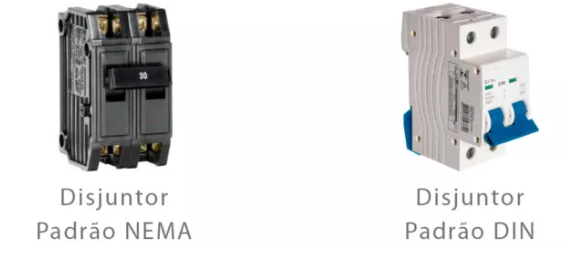
NEMA, North American standard, is older than DIN, the European standard. In addition to the color, the main differences between the standards are:
- Unlike DIN, NEMA doesn’t have a coil and its protection depends only on the bimetal.
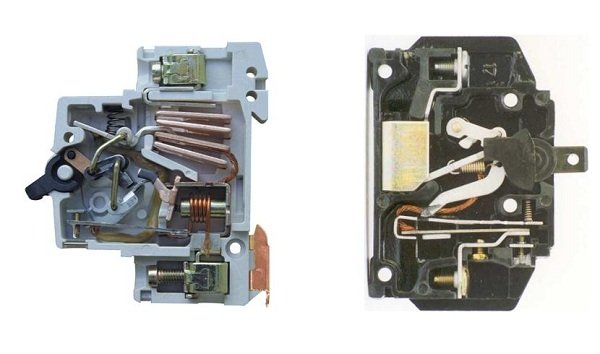
- Short-circuit breaking capacity (in kA): NEMA has 66% lower capacity than DIN, by that, DIN can break a higher short-circuit current without breakdown.
- NEMA’s box is made of bakelite, a synthetic resin chemically stable and heat-resistant. DIN’s box is composed by polyesther or urea formaldehyde.
- Fixation on the circuit: on DIN, fixation terminal has grooves, while NEMA’s pins are fixated with screws, which can cause cable disconnection over time.
- Extinction arc chamber: NEMA has a bent sheet and DIN has splitter plates.
Although NEMA is still present in some older installations, DIN is safer and more efficient.